
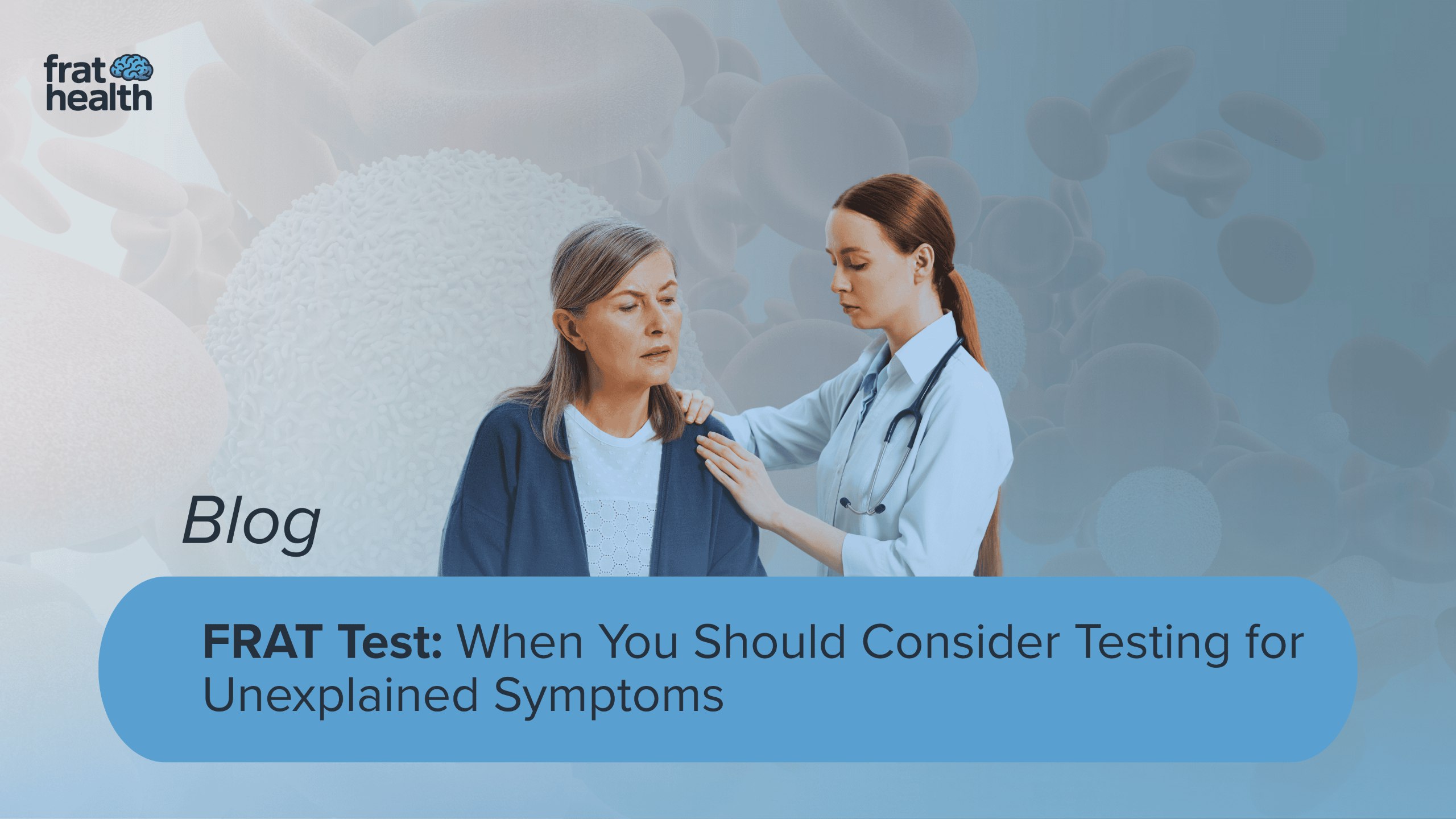
You know that feeling when something’s just off, but no test, no doctor, and no vitamin seems to explain it?
You’re eating well, sleeping enough, maybe even working out, but you still wake up tired. You forget words mid-sentence. You’re irritable for no reason. You feel foggy, disconnected, and not quite you.
You go for check-ups, maybe get your blood tested, and everything comes back “normal.” Still, your body doesn’t feel normal.
If this sounds familiar, you’re not alone. Millions of adults experience unexplained symptoms that linger without clear answers. But what if those vague, frustrating signs were pointing to something specific, something that’s finally measurable?
That’s where the FRAT test comes in.
The Hidden Layer of Health Most Tests Miss
We tend to think of vitamins as simple. You eat nutritious food, take a multivitamin, and you’re covered. But the truth is, your body’s ability to use nutrients is just as important as getting them in the first place.
This is especially true for folate, also known as Vitamin B9. Folate fuels the brain, supports focus, builds DNA, and regulates mood. Without it, your mental clarity, energy, and even emotional balance can take a hit.But here’s what most people and even some doctors overlook. You can have perfectly normal folate levels in your blood and still have a functional folate deficiency in your brain.
Why? Because folate might not be reaching where it needs to go.
Folate Receptor Antibody Testing: Understanding the Root Problem
Sometimes, the body creates antibodies that block folate from entering the brain and nervous system. These antibodies are known as folate receptor antibodies, and the condition is called folate receptor autoimmunity.
When this happens, folate can’t cross the blood-brain barrier effectively, even if there’s plenty of it circulating in your bloodstream. The result? The brain becomes folate-deficient even though your diet or supplements might look fine on paper.
This disconnect explains why so many people experience unexplained symptoms like:
- Constant fatigue that doesn’t improve with rest
- Poor concentration or “brain fog”
- Mood changes, anxiety, or mild depression
- Speech or memory difficulties
- Low motivation or apathy
- Dizziness, headaches, or mental sluggishness
These symptoms can seem random, but they often trace back to one thing: your brain not getting enough folate.
This is exactly what the FRAT test is designed to uncover.
What Exactly Is the FRAT Test?
The FRAT test is a simple blood test that detects whether y our body has folate receptor antibodies. These antibodies act like barriers that block folate from crossing into the brain.
Think of it like this. Folate is the key nutrient, the brain is the lock, and the receptor is the keyhole. The FRAT test checks whether anything is jamming that keyhole.
If antibodies are present, they may be preventing folate from being properly absorbed and used, which could explain why you feel tired, foggy, or emotionally low despite an otherwise healthy lifestyle.
This test goes far beyond the standard folate deficiency diagnosis. Instead of just checking folate levels in your blood, it investigates how folate is transported and whether something is interfering with the process.
According to a study published in Frontiers in Neuroscience, folate receptor antibody testing has helped identify previously undiagnosed cases of cerebral folate deficiency, especially in patients whose symptoms mimicked anxiety, chronic fatigue, or cognitive decline.
That’s what makes the FRAT test groundbreaking. It looks beyond the surface and gets to the root cause.
Why Unexplained Symptoms Often Go Overlooked
The healthcare system is great at spotting obvious diseases, but not always the subtle ones. If you don’t fit into a clear diagnostic box, your symptoms might be brushed off as stress, hormones, or lifestyle-related.
But many people who test positive for folate receptor antibodies describe a similar story. They’ve been struggling for years with symptoms that didn’t fit any standard diagnosis.
You might relate to this if you’ve ever been told:
- “Your labs are fine. You’re probably just stressed.”
- “Maybe it’s anxiety or low blood sugar.”
- “Try more sleep and a better diet.”
The truth? Your body could be doing everything right eating the greens, taking the supplements but your brain isn’t getting what it needs.
That’s why folate receptor antibody testing is becoming an important tool in uncovering hidden nutrient dysfunction.
What the FRAT Test Can Reveal
The FRAT test can detect two types of antibodies:
- Blocking antibodies that stop folate from binding to its receptor and entering cells
- Binding antibodies that stick to the receptor and reduce folate transport efficiency
When either type is present, it means your body’s folate transport system isn’t working properly.
The result can be a subtle but chronic form of folate deficiency that affects your brain and nervous system without showing up in typical blood tests.
This can lead to what researchers call functional folate deficiency.
When You Should Consider the FRAT Test
If you’ve been experiencing ongoing fatigue, brain fog, or mood changes with no clear cause, the FRAT test can be a valuable next step.
Here’s an adult symptom checklist to help you decide:
Consider the test if you have:
- Fatigue that doesn’t improve with rest
- Frequent headaches or dizziness
- Ongoing anxiety or low mood
- Trouble focusing or remembering details
- A history of low folate despite supplements
- Cognitive decline or “mental burnout”
- Speech or communication difficulties
- Infertility or hormonal imbalance with no explanation
If several of these apply, the FRAT test may offer real clarity.
The process is simple. You schedule a virtual consultation and a phlebotomist collects a quick sample at home or at a nearby lab. This is part of modern telehealth folate testing, making care easier than ever.
How Folate Receptor Antibody Testing Leads to Real Answers
Once the test results come in, your provider can determine whether folate receptor antibodies are contributing to your symptoms.
If antibodies are detected, treatment often involves active forms of folate such as folinic acid or Leucovorin that bypass the blockage and reach the brain.
This approach has helped both children and adults experience better focus, improved mood, and more consistent energy.Some studies exploring folinic acid and depression also show promising benefits, revealing that correcting folate transport can improve emotional well-being and even support antidepressant response.
This demonstrates that some mental health struggles are not just psychological. They can be metabolic.
The Difference Between Folate Deficiency Diagnosis and Folate Blockage
Traditional folate testing measures how much folate is in your bloodstream.
Folate receptor antibody testing measures whether folate can reach your brain.
Someone can have “normal” folate levels and still experience neurological folate deficiency because of receptor antibodies.
This is why the FRAT test is becoming one of the most advanced forms of folate deficiency diagnosis. It reveals what standard tests cannot.
Why Thoughtful Testing Matters
The FRAT test is more than a lab test. It represents a shift in how we think about wellness.
Instead of reacting to symptoms, it helps you understand why they’re happening.
And when you understand the why, you can finally take control of your health instead of guessing.
The Takeaway
If you’ve been struggling with unexplained symptoms, do not stop at surface-level testing. The FRAT test can help uncover whether your brain and body are getting the folate they need.
With telehealth folate testing and at-home sample collection, the process is simple and accessible.
You deserve answers. You deserve clarity. And it might be just one test away.
Take the First Step
Book your FRAT folate receptor antibody test today and get answers to the symptoms that never made sense.
With at-home folate testing, expert guidance, and personalized treatment plans, you can finally move from confusion to clarity and begin feeling like yourself again.
Because sometimes, the most powerful form of healing is understanding what your body has been trying to tell you all along.